Tofu is made from just a few ingredients: soybeans, water, and nigari (bittern). However, the flavor varies depending on the amount of water or method used. It is a processed soybean food with strong regional roots in Japan’s climate, topography and traditional culture. Rich in nutrients like high-quality protein and lipids but low in calories, it also contains isoflavones, and is popular as a food that promotes good health, beauty, and longevity. Its light flavor and versatility mean it can be prepared in many ways and used with various seasonings, making it ideal for Japanese dishes such as hiya-yakko (cold with condiments) in summer and yu-dofu (heated in a light broth) in winter, as well as for Chinese and Western cuisine, and even desserts. Tofu is now a familiar word all around the world.
Tofu can be grilled or deep fried, or preserved by desiccation and freezing, and its byproducts of soymilk and okara (soy lees) can be consumed so that nothing is wasted. We do a deep dive into the world of tofu, an increasingly popular food that the Japanese have loved since time immemorial.
Tofu came to Japan from China, its birthplace, during the Nara period (710-794). It is said to have been introduced to Japan by monks who had gone to Tang China as envoys. It was popularized in the form of shojin ryori (monastic vegetarian cuisine) as Zen Buddhism became widespread during the Kamakura period (1185-1333) and Muromachi period (1336-1573). It gradually came to be eaten by the samurai class as well. Tofu production was introduced to Kyoto from Nara Prefecture, and spread nationwide during the Muromachi period.
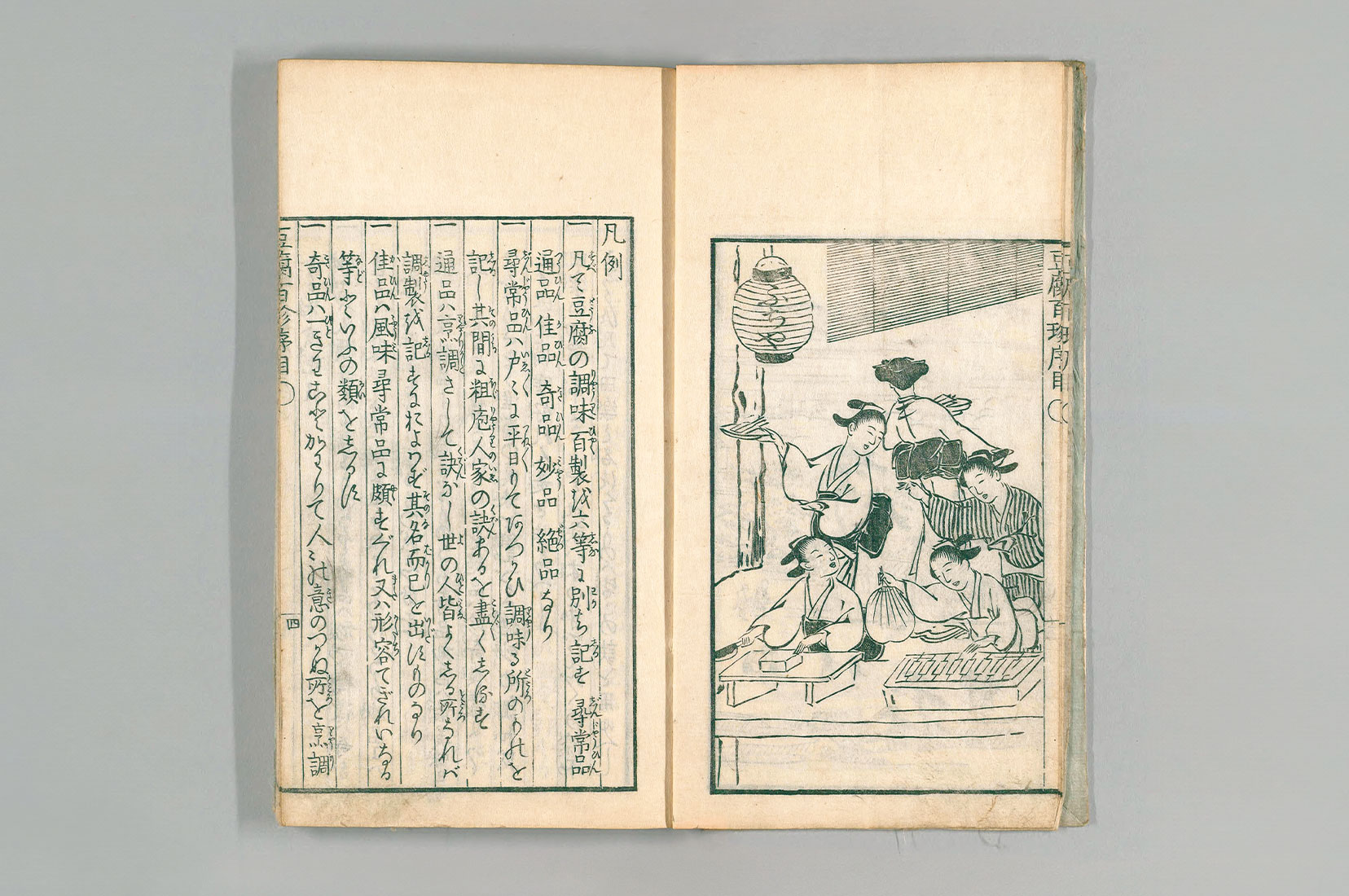
During the Edo period (1603-1868) it became a food of the common people, as it is today. This was triggered by the spread of stone mortars to grind the soybeans, and also the publication in 1782 of Tofu Hyakuchin (100 Tofu Delicacies). This tofu recipe book was published in Osaka and became a massive bestseller.
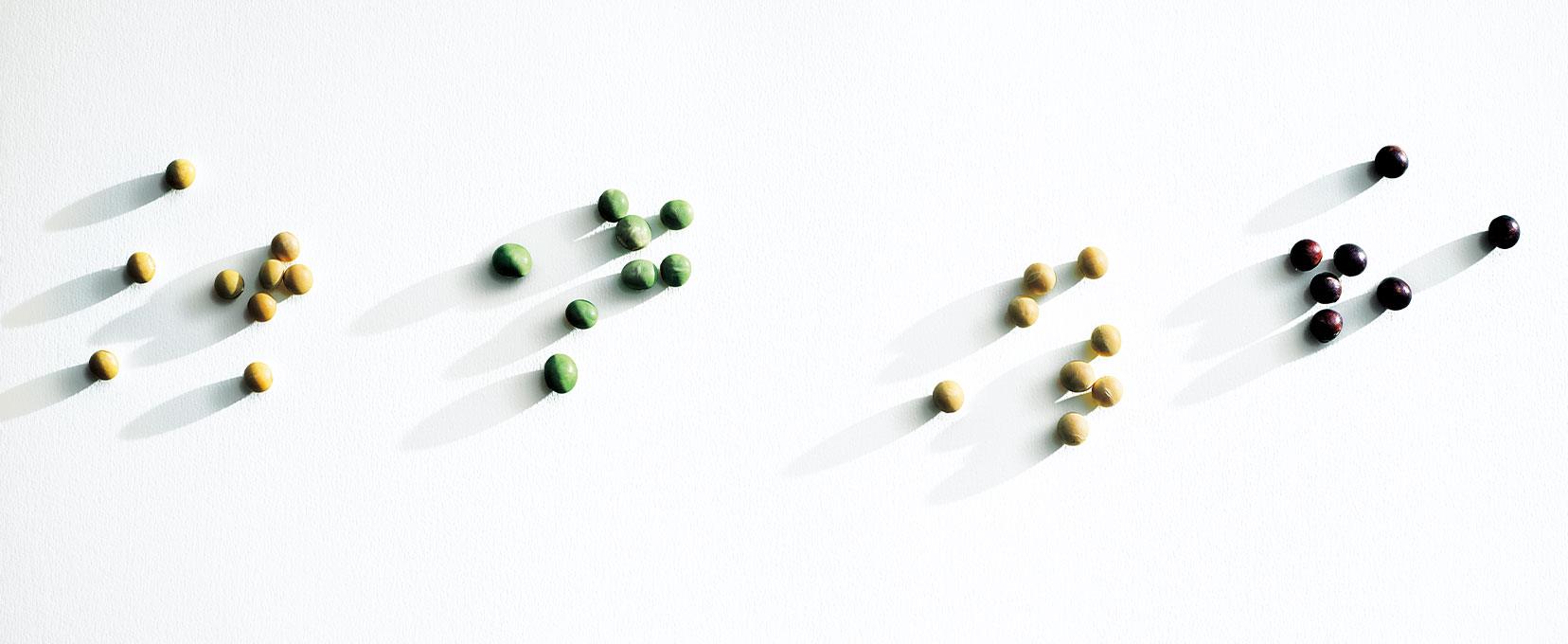
“It is estimated that more than 400 varieties of soybeans are grown in Japan, and tofu has the highest ratio of domestically grown beans amongst processed soybean foods. The flavor, aroma and firmness vary according to the variety of soybean selected, so some artisans are extremely particular about the ingredients,” says Tofu Meister Shiori Kudo.
Native varieties are ones that have been cultivated by farmers for a long time with the seeds being passed down through generations, as opposed to recommended varieties whose cultivation is encouraged to ensure a stable supply. Production of the former is limited due to small-scale cultivation. There is a low yield and they can be difficult but, on the other hand, they have distinctive characteristics.
“The soymilk concentration determines the flavor of the tofu. Even if the same variety of soybean is used, the quality of the tofu is determined by the number of soybeans used to make each block. Technology exists to reliably solidify slightly thin soymilk, and industrially produced tofu is available at a reasonable price from mass retail outlets, but artisans insist on soymilk with a high concentration of soybeans. Even when the same variety of soybean is used, there will be variations in texture and aroma, so making tofu requires wisdom, ingenuity, and experience. If fewer artisans use a native variety, the number of farmers growing it will decrease and the distinctive characteristics of that tofu will be lost.”
It is not only the distinctive qualities of the soybeans that make tofu so fascinating, but also the abundance of regional characteristics. For example, Shiraminemura in Ishikawa Prefecture and Gokayama in Toyama Prefecture produce kata-dofu , which is so hard that it can be bound with a cord. Fukushima Prefecture’s tsuto-dofu is wrapped in straw matting and heated in hot water to extend its shelf life. Seawater with high salinity is used as the nigari for Okinawa’s shima-dofu so that it keeps well.
“In the past, distribution channels were not as well developed as they are today, so local communities thought about ways to extend the shelf life of tofu and developed production methods that made sense for their region. Tofu has regional characteristics, just like cheese does in Europe.”
Kudo says that many people overseas value tofu as being good for the environment and health rather than simply liking it just as it is, and they generally eat it in a processed form.
“Japanese tofu doesn’t require a fermentation process, unlike natto, miso, and soy sauce. The soybean is tasted directly, so there are many dishes that bring out the flavor of the tofu itself, which will be very fresh like sashimi. I want people to enjoy the aroma and texture of tofu just as it is.”
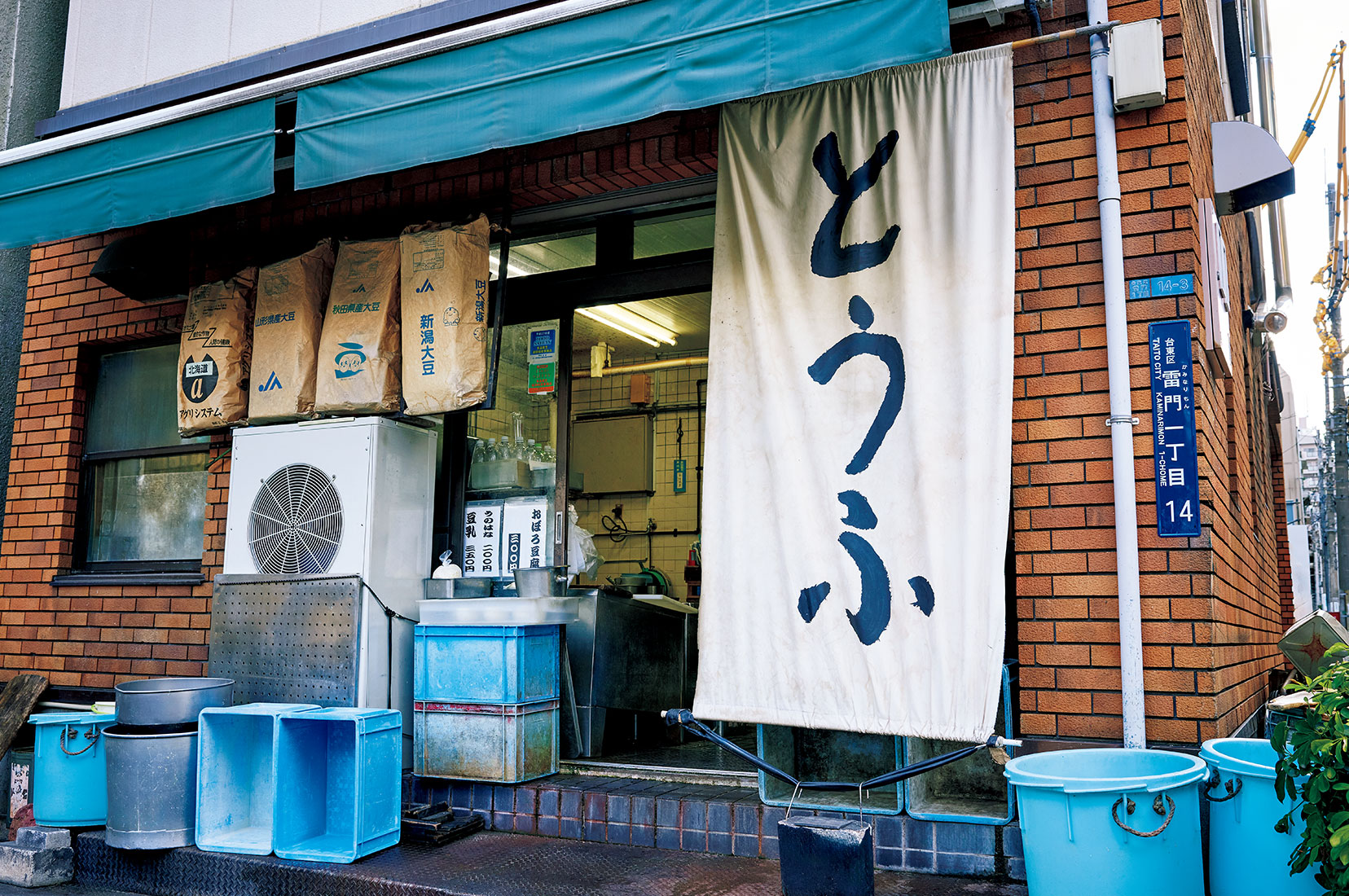
There were around 50,000 tofu shops nationwide in 1960, almost as many as the number of convenience stores today. It is said there used to be a public bathhouse and tofu shop in every neighborhood, so the tofu shop was a familiar presence. Tofu sellers doing their rounds, blowing a horn to make a sound like “to-fu-” as they sold their wares in the street, were an iconic sight in the Showa era (1926-1989), but a 2022 survey found that only 4,599 remained. Over the past 20 years, shops have been closing down at a pace of 500 a year.
Ichikawa Tofu-ten, established in 1906, still preserves the traditional style. Its third-generation proprietor, Toshio Ichikawa, starts work at 4 o’clock in the morning.
“We use a blend of soybeans from Akita Prefecture, Yamagata Prefecture and Hokkaido, where the yield is high, to prevent any variations in flavor and quality. We did use six varieties at one point but have now settled on four or five.”
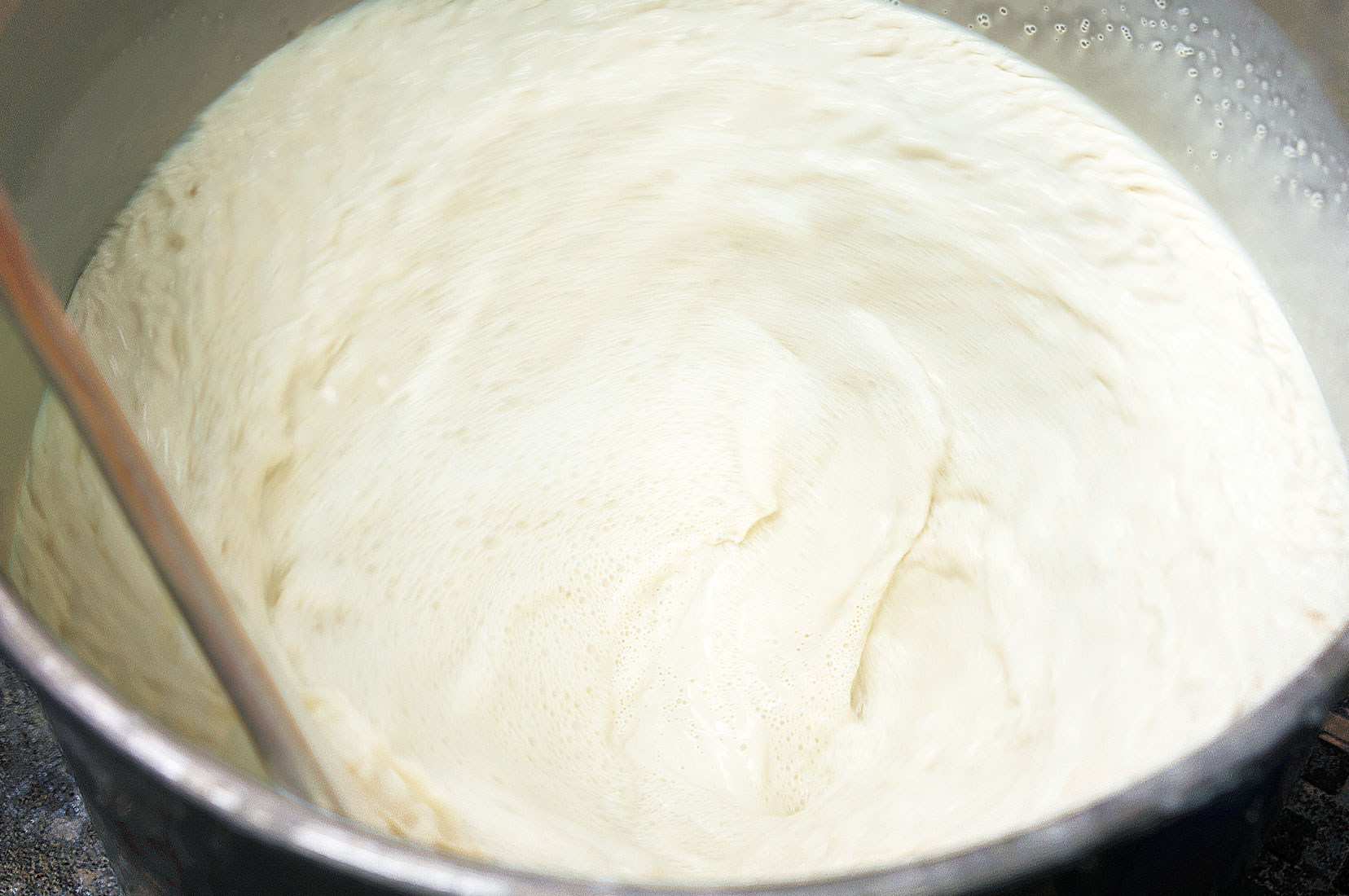
They remove any split or damaged beans before washing the soybeans repeatedly in cold water and leaving them to soak. In the morning, the beans are mashed into a paste (namago) in a grinder while adding water as needed. The amount of water is adjusted to create the right concentration depending on the type of tofu being made, and the paste is heated (nigo).
“We soak the beans for six or seven hours in summer, and for 24 hours in winter. We sometimes cool them in the fridge on particularly hot nights so they do not spoil. It can be hard to read the weather conditions and air temperature correctly. When we still used well water, it was usual to get up in the night and check on the beans.”
The heated nigo is strained through a cloth to separate the soymilk and the okara. Nigari is added to the soymilk, which solidifies to form tofu.
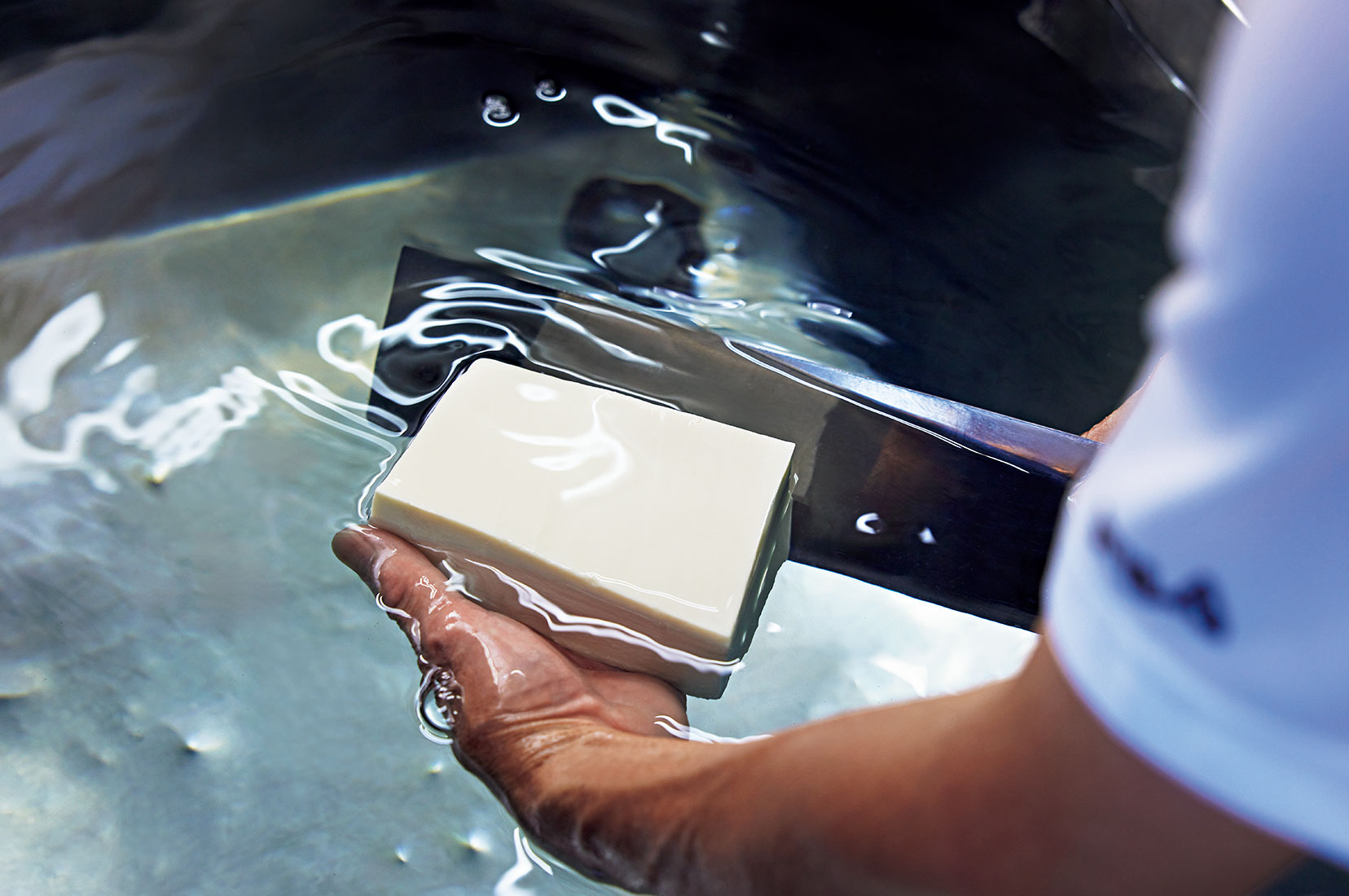
Ichikawa Tofu-ten
*Ichikawa Tofu-ten store has closed as of January 2025.
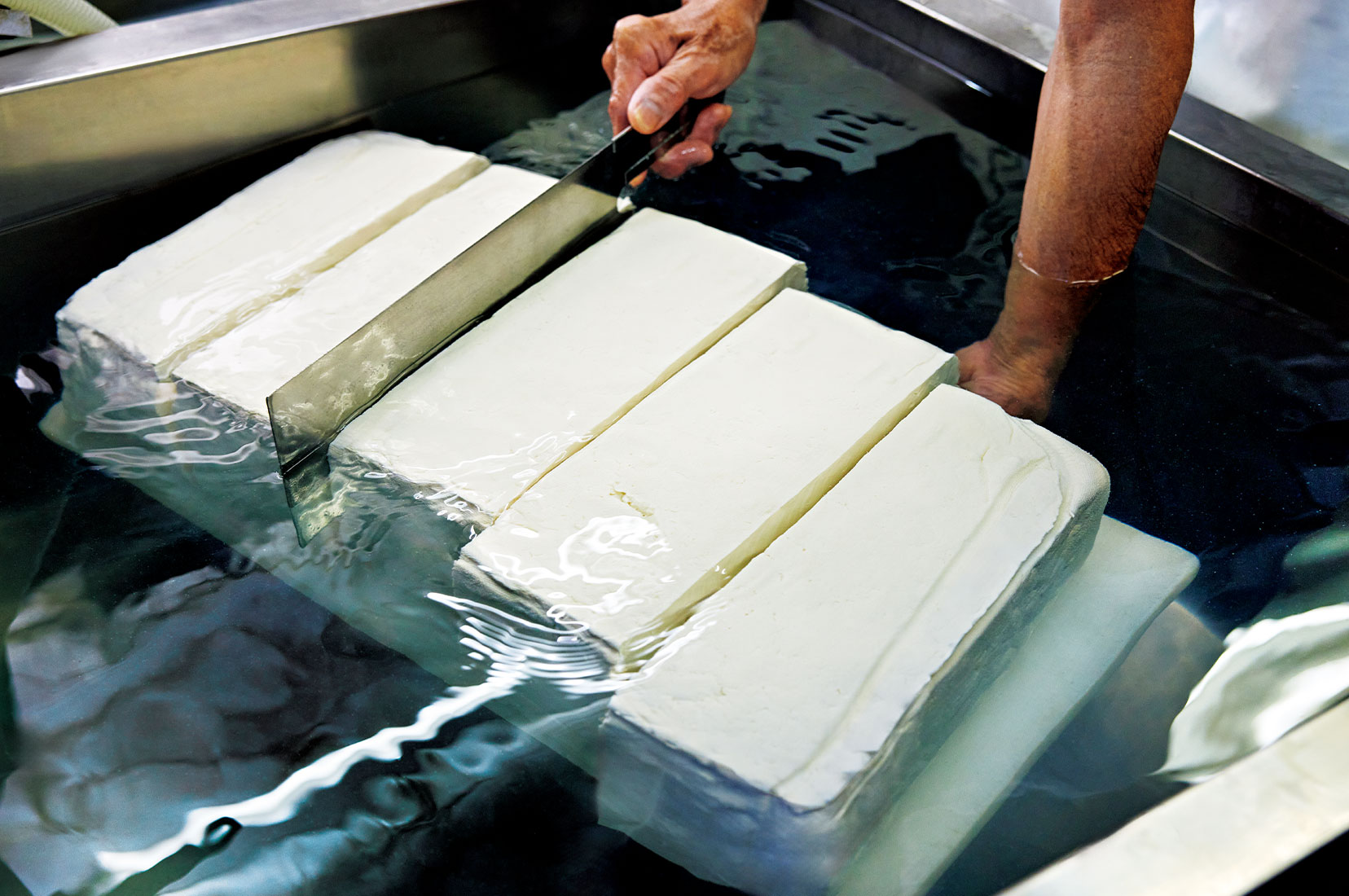
Soft, smooth kinugoshi-dofu (silken tofu) solidifies in a mold before being cut. Momen-dofu (firm tofu) is made by crumbling the tofu into a mold with holes where it is pressed down with weights to remove excess moisture before it resolidifies. Yose-dofu (or oboro-dofu) is soft, unpressed tofu that has been ladled into a container before it has set completely. Other kinds of tofu include abura-age, thin slices of a special tofu that have been fried in canola oil. The products are on the shelves at around eight o’clock, and local residents come to buy their tofu. Freshly-made tofu has a smooth mellow flavor where you can really taste and smell the beans. So pure that it does not need any seasoning or condiments, it is a delicious treat.
“In the past, when there were no convenience stores or refrigerators, tofu makers would start work at three o’clock in the morning so that it was ready in time for people’s breakfast of boiled rice with freshly-made tofu and piping hot abura-age . That was the norm in those days.”
Tofu production is rooted in people’s daily lives, and there are as many distinctive styles as there are tofu makers. A neighborhood with a tofu shop is a good neighborhood.
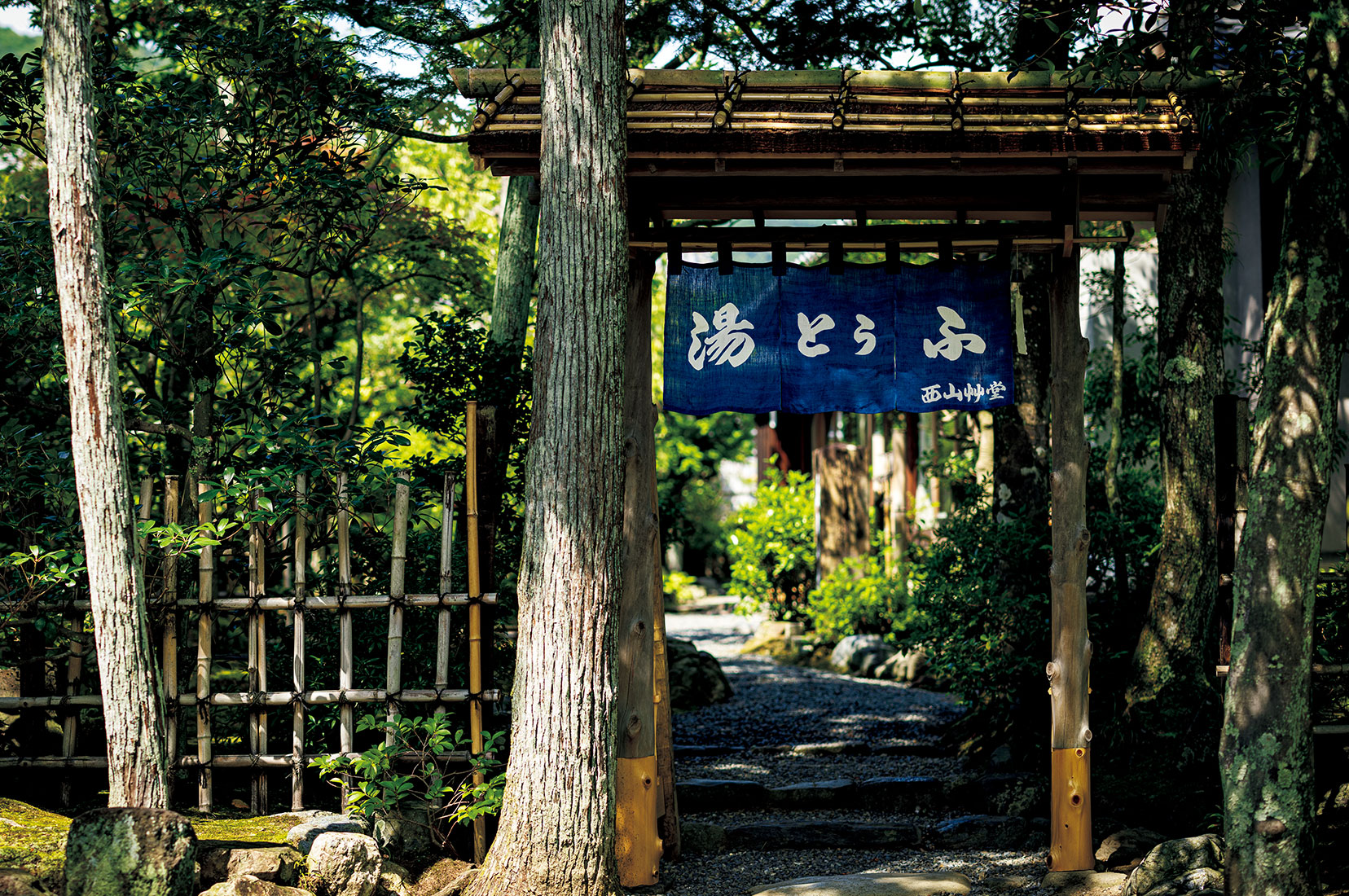
Shojin ryori, made from plant-based ingredients such as vegetables and pulses, is well-known as the diet of monks, who were forbidden to eat meat by Buddhist precepts. Tofu is an important source of protein and, as the monks sought out new ways of using it and improved their cooking techniques, it was refined into stunning and satisfying modoki-ryori where it was made into mock meat or fish. History tells us that tofu was widely used as a shojin ryori ingredient in Kyoto, which has a particularly large number of temples.
Tofu is 80 to 90% water. Kyoto is blessed with abundant high quality underground water from the mountains which encircle the city on three sides, which is probably why there are so many tofu restaurants and tofu shops that have inherited the traditional style of making tofu. A prime example is Seizan Sodo, said to be the oldest yu-dofu restaurant in Sagano. It is located inside Myochi-in temple, a subtemple of Tenryu-ji temple on Arashiyama.
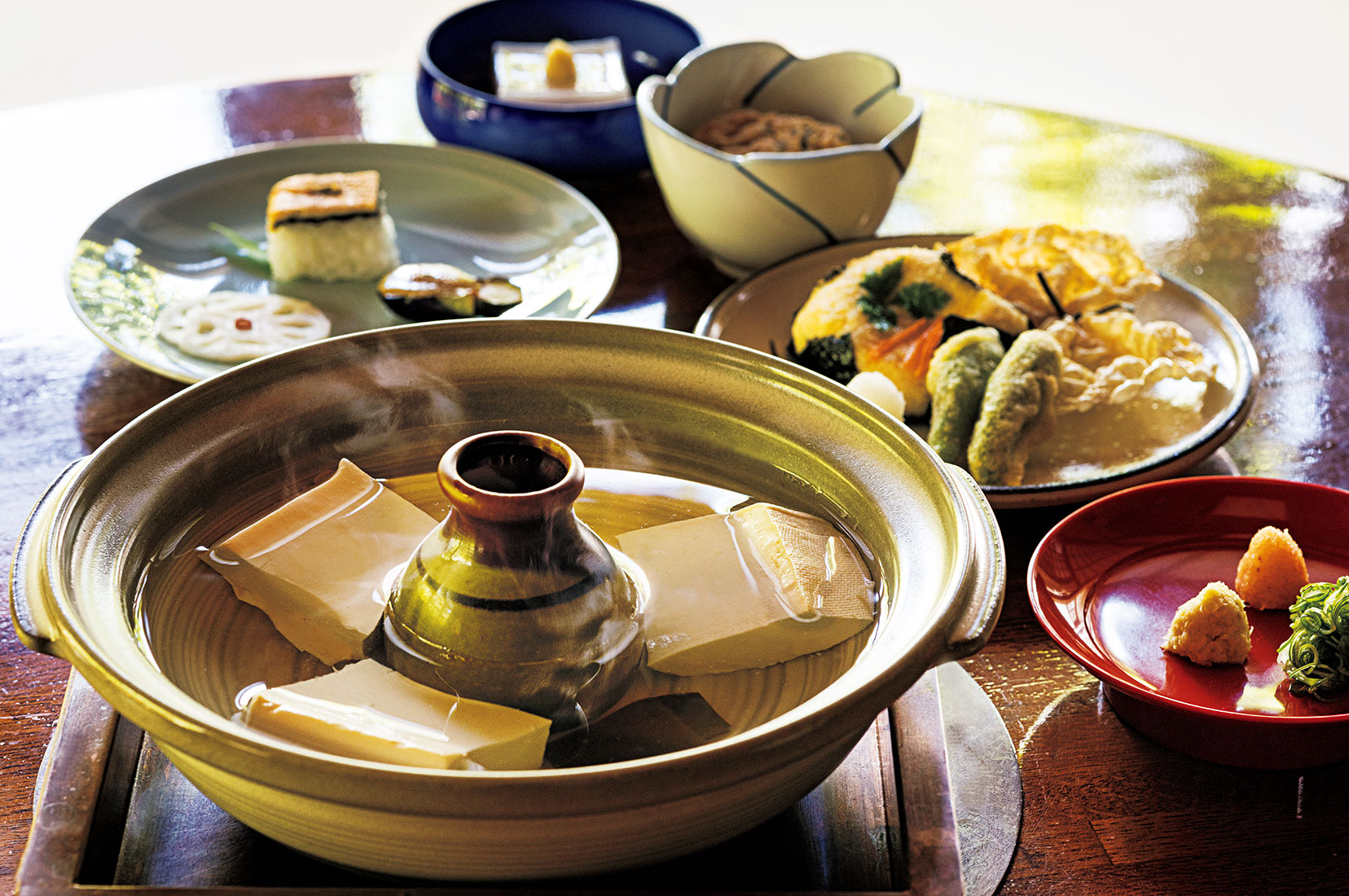
“Arashiyama bustles with tourists nowadays, but there were no souvenir shops or restaurants in the post-war years. Seizan Sodo began when the chief priest before last, who enjoyed cooking, started to serve shojin ryori as lunch for poets who visited the temple,” says Noriko Shimami, its proprietress.
The restaurant offers a set meal with yu-dofu as the main dish. It also serves simmered hirousu , which is drained tofu that has been mixed with carrot, burdock, cloud ear mushroom, gingko nut, and lily root, and then deep fried. Tofu is also made to look like eel broiled in a soy-based sauce, and the immaculate mock hako-zushi (molded sushi) is sure to impress.
The star of the meal, the yu-dofu, has plump tofu floating in a kelp broth and is truly delicious. People in Kyoto like their tofu smooth and soft, so much so that there is even a saying “If you have to chew it, it isn’t tofu.” Seizan Sodo’s tofu fits that bill perfectly.
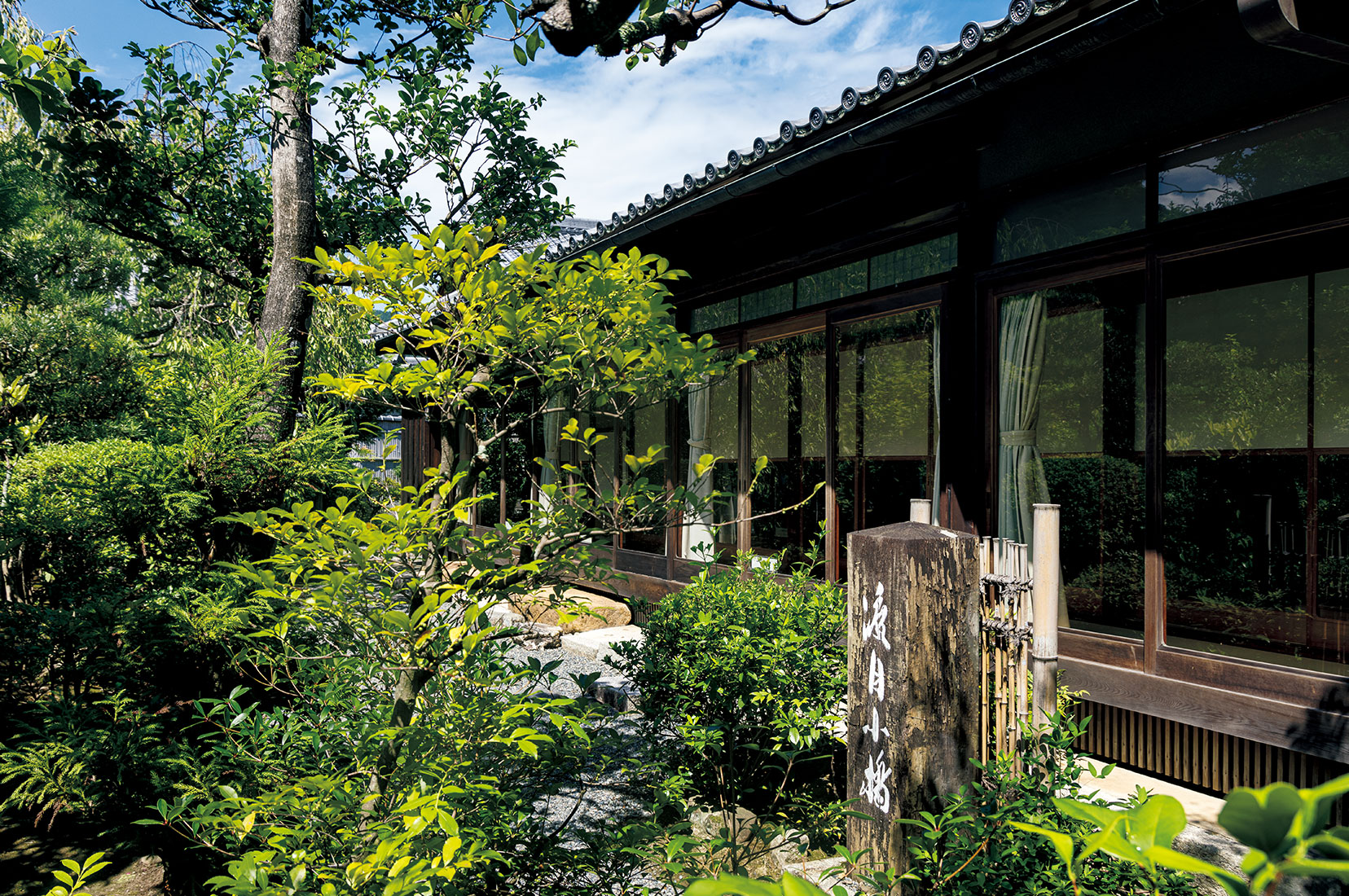
Seizan Sodo
63, Sagatenryuji Susukinobabacho, Ukyo-ku, Kyoto-shi, Kyoto
Tel. 075-861-1609
The restaurant uses tofu made by Saga Tofu Morika, a shop that dates back 150 years. Located within walking distance, Seizan Sodo has used its tofu ever since the restaurant was established.
“Even though it is momen-dofu, Morika’s tofu is smooth like kinugoshi-dofu while still being firm. Kyoto is located in a basin between mountains, so it has particularly hot summers and cold winters. In the hot months, we serve hiya-yakko that has been thoroughly firmed up in ice. In the cold months, we serve yu-dofu on a charcoal brazier to keep it hot. The brazier isn’t to simmer it, but to ensure our guests can enjoy yu-dofu that stays hot until they finish it. They are both tofu dishes, but yu-dofu and hiya-yakko have a different texture and flavor.”
Shojin ryori that provides a well-rounded experience of the merits of tofu, and the local tofu shop that supports those delicious flavors. Visitors will surely come to see that nutritious tofu has a profound appeal that words simply cannot express.
Text: Mamiko Kume
Photos: Sadato Ishizuka, Shinmei, Masatomo Moriyama
This article is based on an article that appeared in THE PALACE Issue 08 published in February 2025 and contains information current as of February 2026. Please note that the article uses text and photos from 2025, and there may be some information that is not up to date.
More