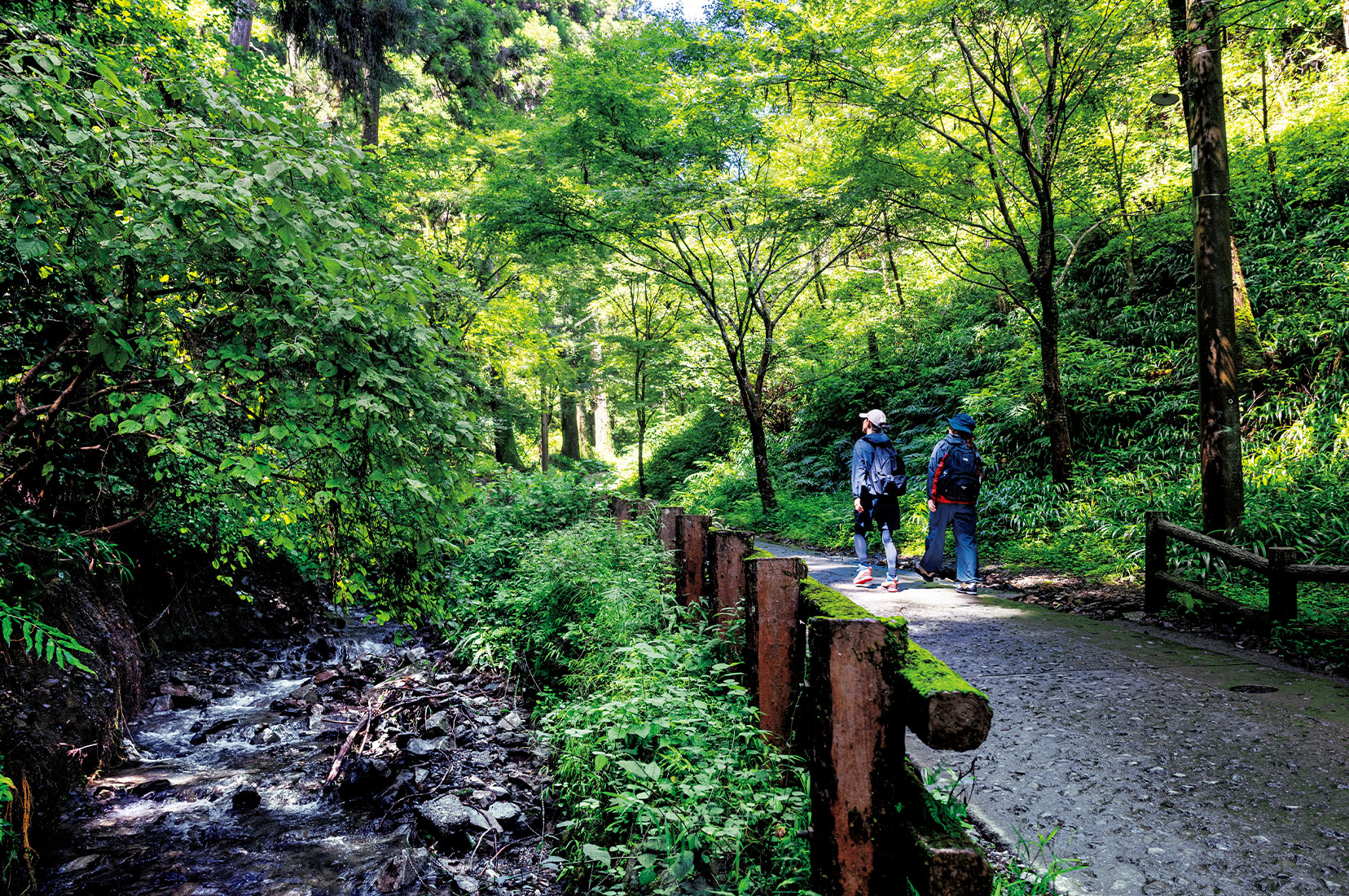
Mt. Takao is located on the outskirts of Hachioji, Tokyo and runs along the border with Kanagawa Prefecture. With an altitude of 599 meters, it is a mountain that offers a variety of different trails, from gentle hikes to serious trekking. Conveniently located about an hour from central Tokyo, it is one of the world’s most popular destinations for hikers, whose numbers were boosted even further when it was recognized as a three-star destination by the Michelin Green Guide Japan in 2009.
All the trails take around three hours to complete, to the summit and back. Trail 1 (the omotesando route) leads from the foot of the mountain to the summit by way of Takaosan Yakuoin temple, and Trail 6 (the Biwataki Waterfall route) follows a mountain stream and passes by Biwataki Waterfall on its way to the summit. Visitors can take a cable car or chairlift to halfway up the mountain, so they can enjoy trekking in their everyday clothes. The forest is home to a diversity of wild birds and animals; hikers might even encounter a Japanese giant flying squirrel in the evening if they are lucky. The summit offers a panoramic view of Okutakao, Okutama and Mt. Fuji.
Mt. Takao Observatory Restaurant
2205 Takaomachi, Hachioji-shi, Tokyo
Tel. 050-3733-3437
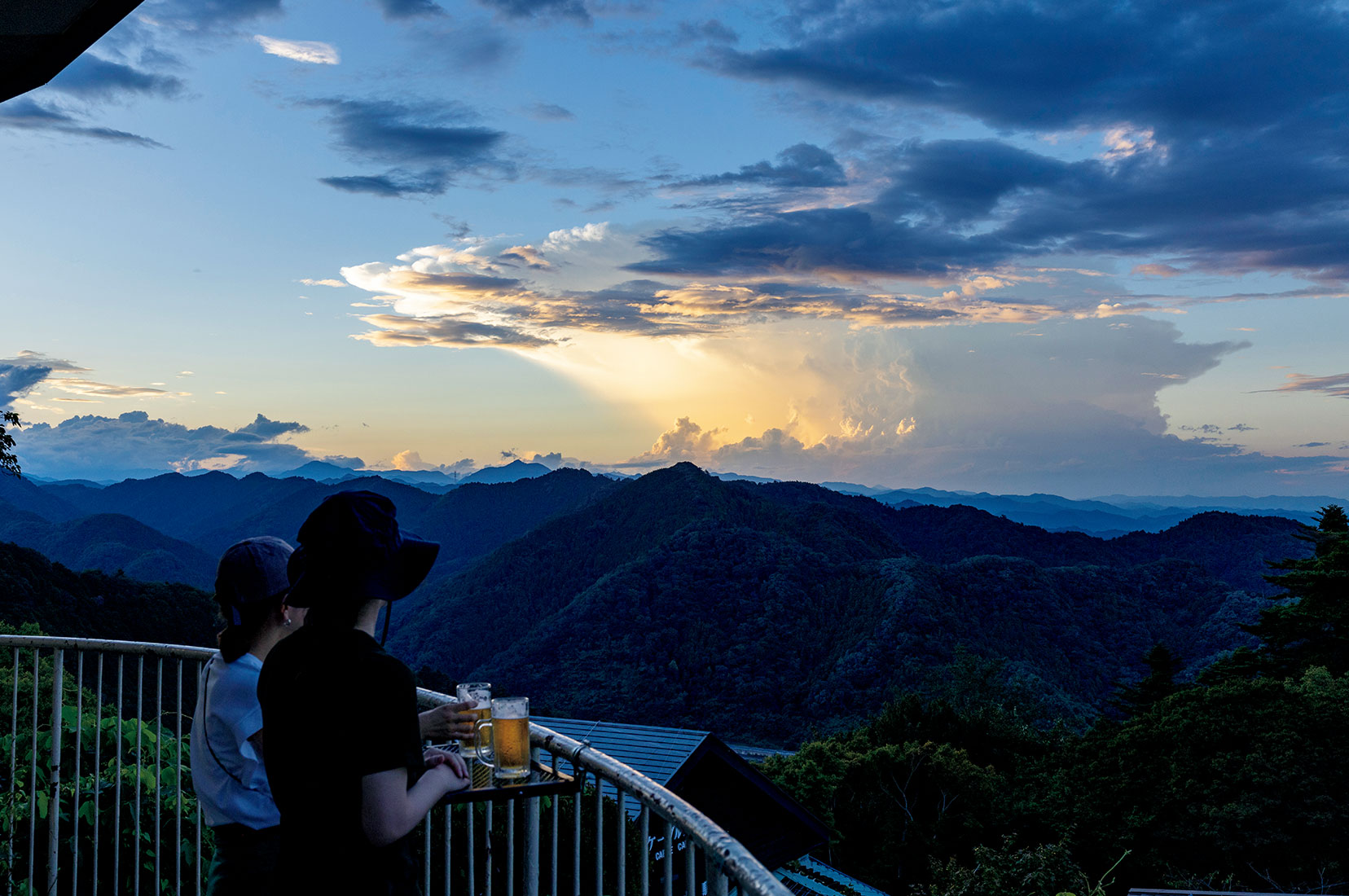
Kasumidai Observation Deck or a terrace seat in the observatory restaurant are great spots to gaze down upon the distant cityscapes of Shinjuku and Yokohama. Takaosan Beer Mount is held during the four summer months, a buffet-style spread of around 30 Japanese, Western and Chinese dishes and a selection of beers and other drinks. Visitors can feast their eyes on the scenery as they watch the sun set and gaze on the nightscape, beer mug in hand.
Mt. Takao is popular because you can hike there even if you leave central Tokyo during the daytime. However, many hikers who head west from Mt. Takao towards Mt. Kobotoke Shiroyama in the Okutakao area, or along the ridge to Mt. Kagenobu and Mt. Jimba, stay overnight before setting off early next morning. A great place to stay is Mt. Takao Base Camp, a cabin-style guest house that opened in 2019. It has seven rooms in all, including dormitories and family rooms. Anyone can also use just the cafe and bar, or just the showers and lockers, or just rent footwear. It is a gathering spot for people who enjoy the mountains, and for a wide range of communities such as trail runners. Motoko Kato, the manager of Mt. Takao Base Camp, told us more. “Our guests are not all here for the hiking. Some work remotely here and go into central Tokyo on certain days. They go for walks nearby on their days off. I believe Mt. Takao is so attractive because it provides the stimulation and relaxation that nature offers. We aim to be a jack-of-all-trades that can respond to such needs.”
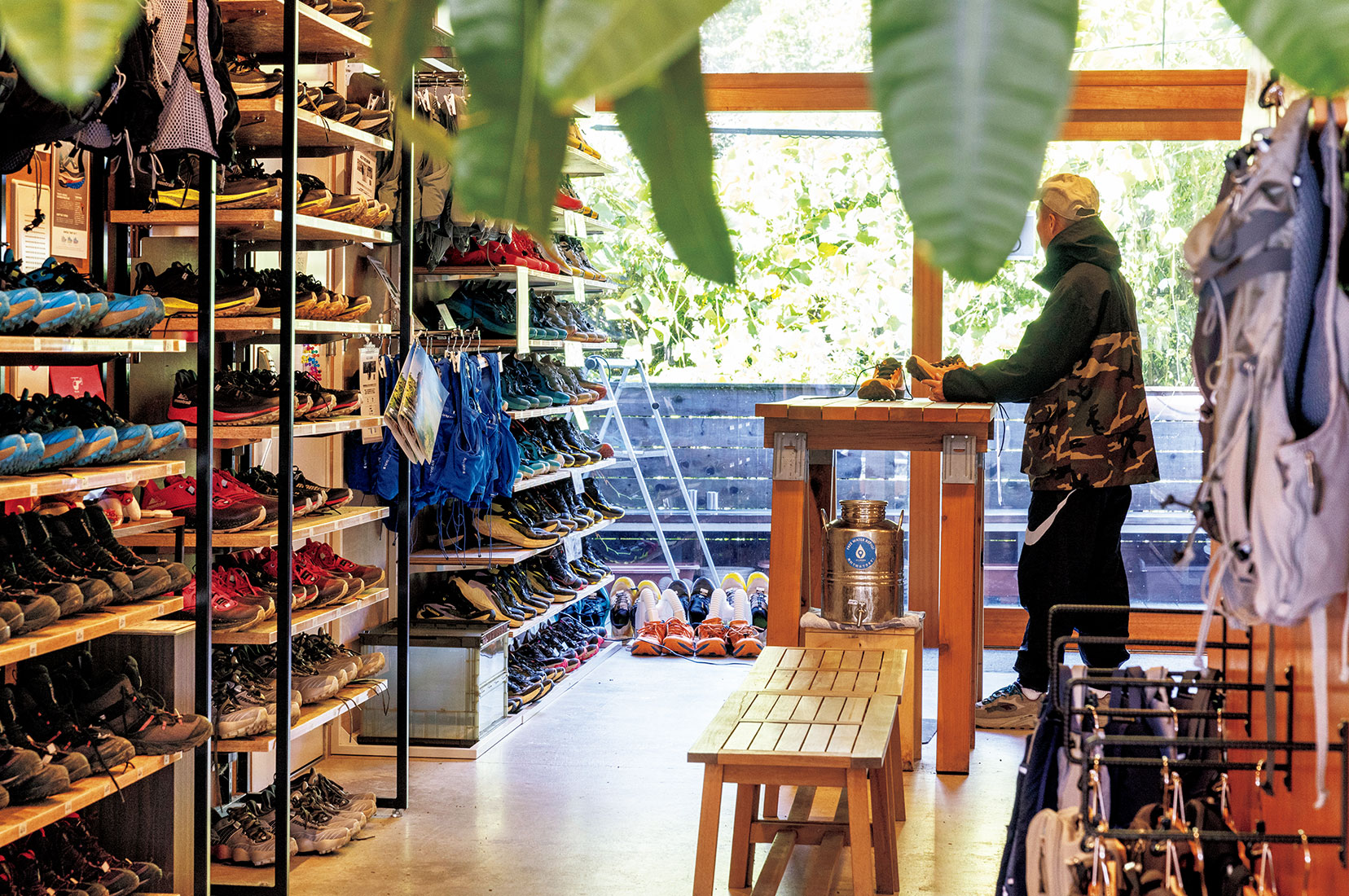
Mt. TAKAO BASE CAMP
1799-3 Takaomachi, Hachioji-shi, Tokyo
Tel. 042-673-7707
In addition to hiking-related events, the guest house also organizes nature walks, opportunities to enjoy the nightscape and the sunrise, and communal clean-ups. It is also focusing on coordinating with base camps in other areas to maintain the Tokai Nature Trail. This trail is the brainchild of the Ministry of Health, Labour and Welfare. It traverses around 90 municipalities in 11 prefectures, linking Mt. Takao with Minoh in Osaka. “We want to provide support from here at Mt. Takao, the starting point, so that all hikers can feel at ease about walking this long trail,” said Kato.
Gokurakuyu, the hot spring next to Takaosanguchi Station on the Keio Line, is a boon for hikers. It is immensely satisfying to head for home after soaking away the day’s exertions in a natural hot spring that has bubbled up from a depth of roughly 1,000 meters.
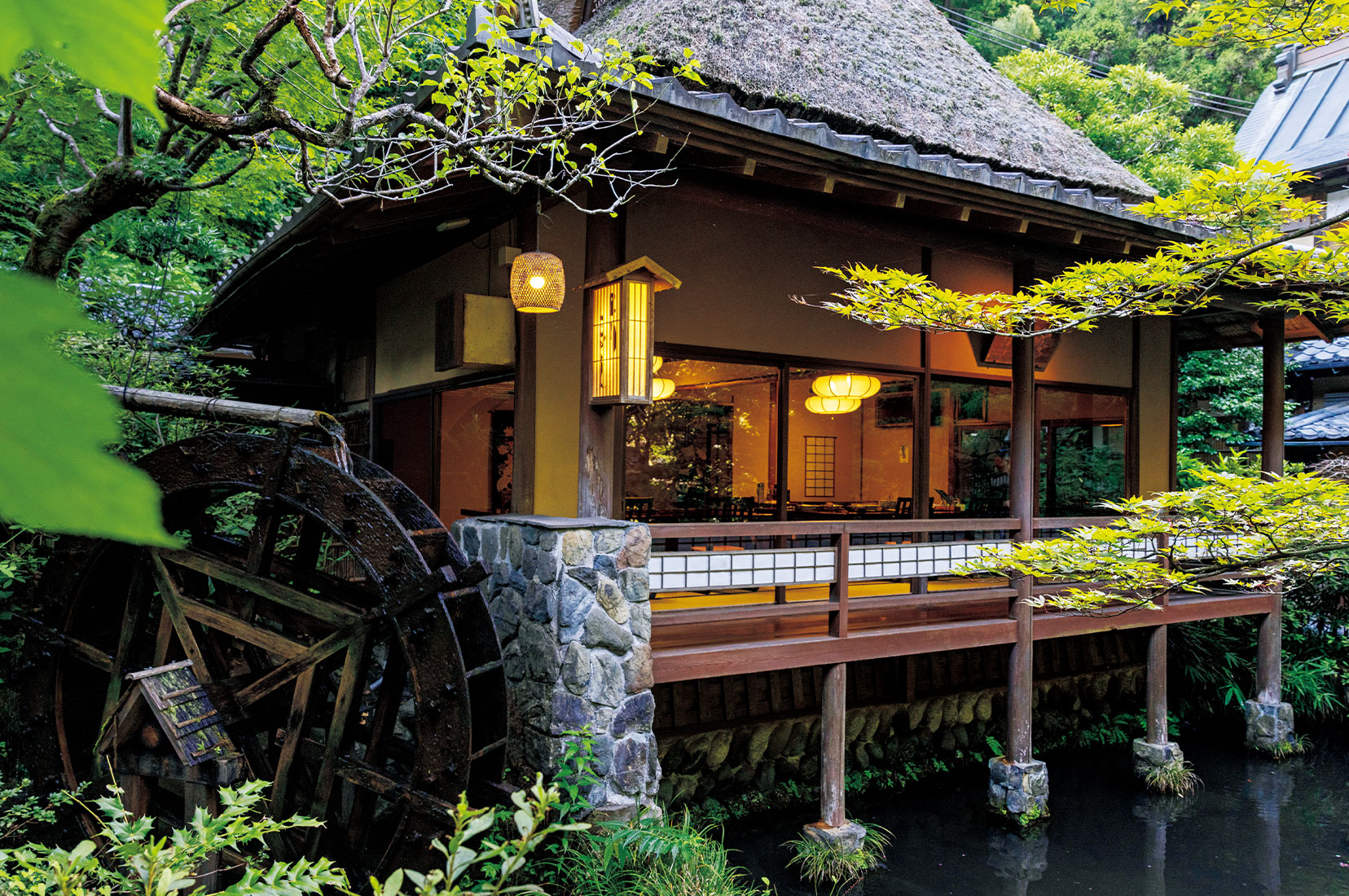
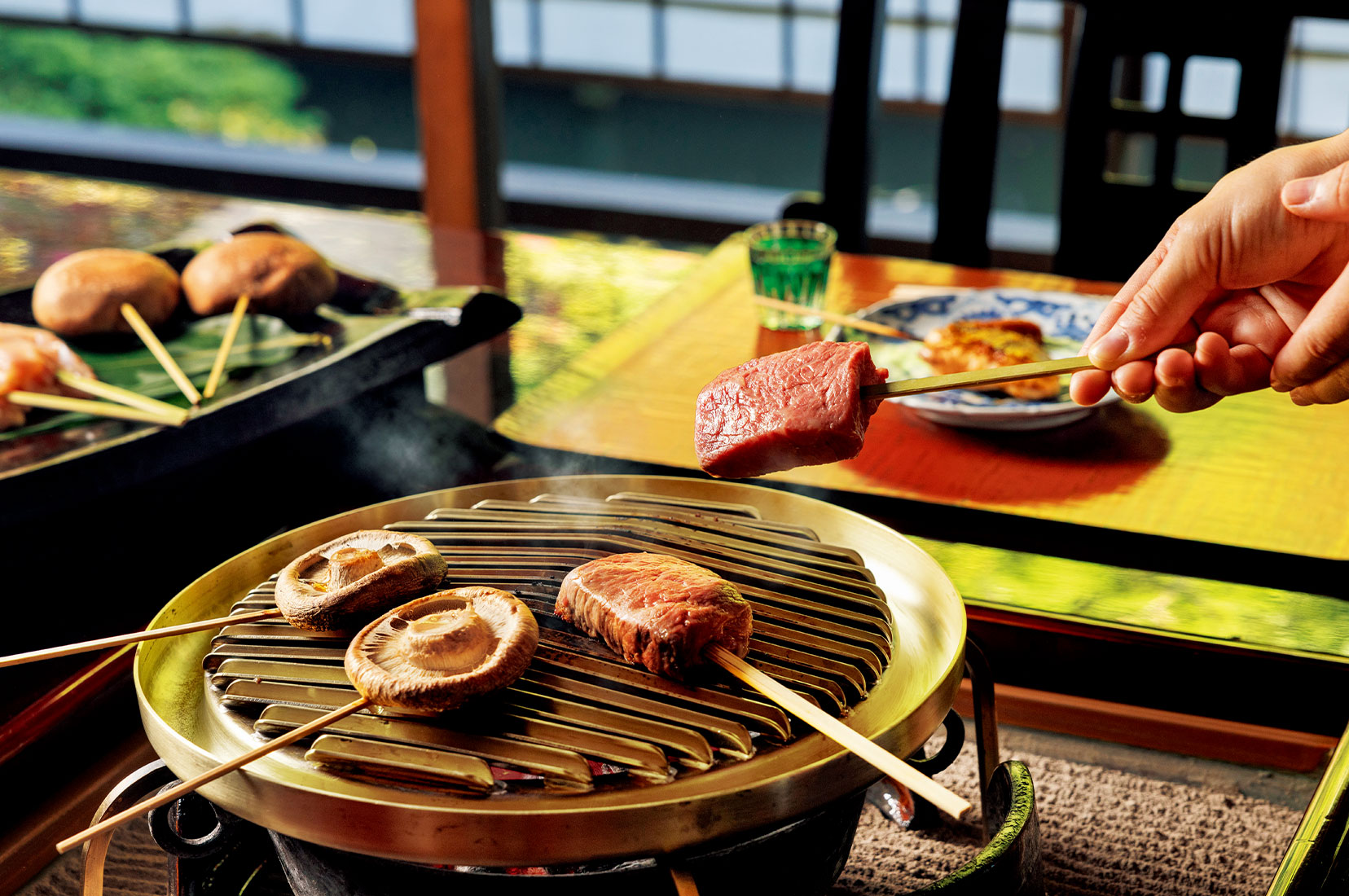
The opportunity to enjoy historied food is another of Mt. Takao’s attractions. It is the birthplace of UKAI, an enterprise which runs 22 restaurants in Japan and overseas. The founder, Sadao Ukai, purchased 992 square meters of land in Takao and launched Ukai Toriyama in 1964 based on his vision of creating a restaurant that would last a century. The site is now a vast 19,835 square meters, dotted with around 40 buildings of various sizes. Ukai Toriyama offers food made from seasonal ingredients. The Charbroiled Beef & Chicken Course is highly recommended. Charcoal-grilled beef and chicken skewers are accompanied by seasonal appetizers, freshwater fish, and mugitoro gohan (rice cooked with barley and topped with grated yam). With babbling brooks and birdsong as background music, visitors can experience the charms each season brings. “I think Ukai looked askance at the frenetic pace of Tokyo’s changes, and successfully preserved the good old ways. The gassho-style house at the entrance to the premises was moved here from Etchu Gokayama in 1968, with assistance from the local community. He believed in the importance of such interpersonal connections. I think he was devoted to giving guests an authentic experience,” said manager Kazunori Okanda.
Ukai Toriyama
3426 Minamiasakawamachi, Hachioji-shi, Tokyo
Tel. 042-661-0739
Takaosan Takahashiya is a soba restaurant near the entrance to the Takaosan Yakuoin omotesando, the main approach to the temple. It was founded around 1830 and has a striking feature: a roughly 150 year-old persimmon tree that grows through its roof. Yakuoin was established in 744 by decree of Emperor Shomu and is one of the foremost temples in the Kanto region. It has long been famed as a sacred site for Shugendo (mountain asceticism) and attracts many worshippers even today. Fifth-generation proprietress Makiko Takahashi, who was born and bred in the area, told us that Takahashi was a restaurant/inn when it first opened. “It was difficult to get here until the Keio Line came this far, so many people would stay overnight before going to worship in the early morning. My husband and I did some renovations when we took over 30 years ago and we found an old palanquin in the cellar. I think Takahashiya used to provide support for people who came to worship, such as transporting them up and down the mountain in the palanquin in the days before there was a cable car.”
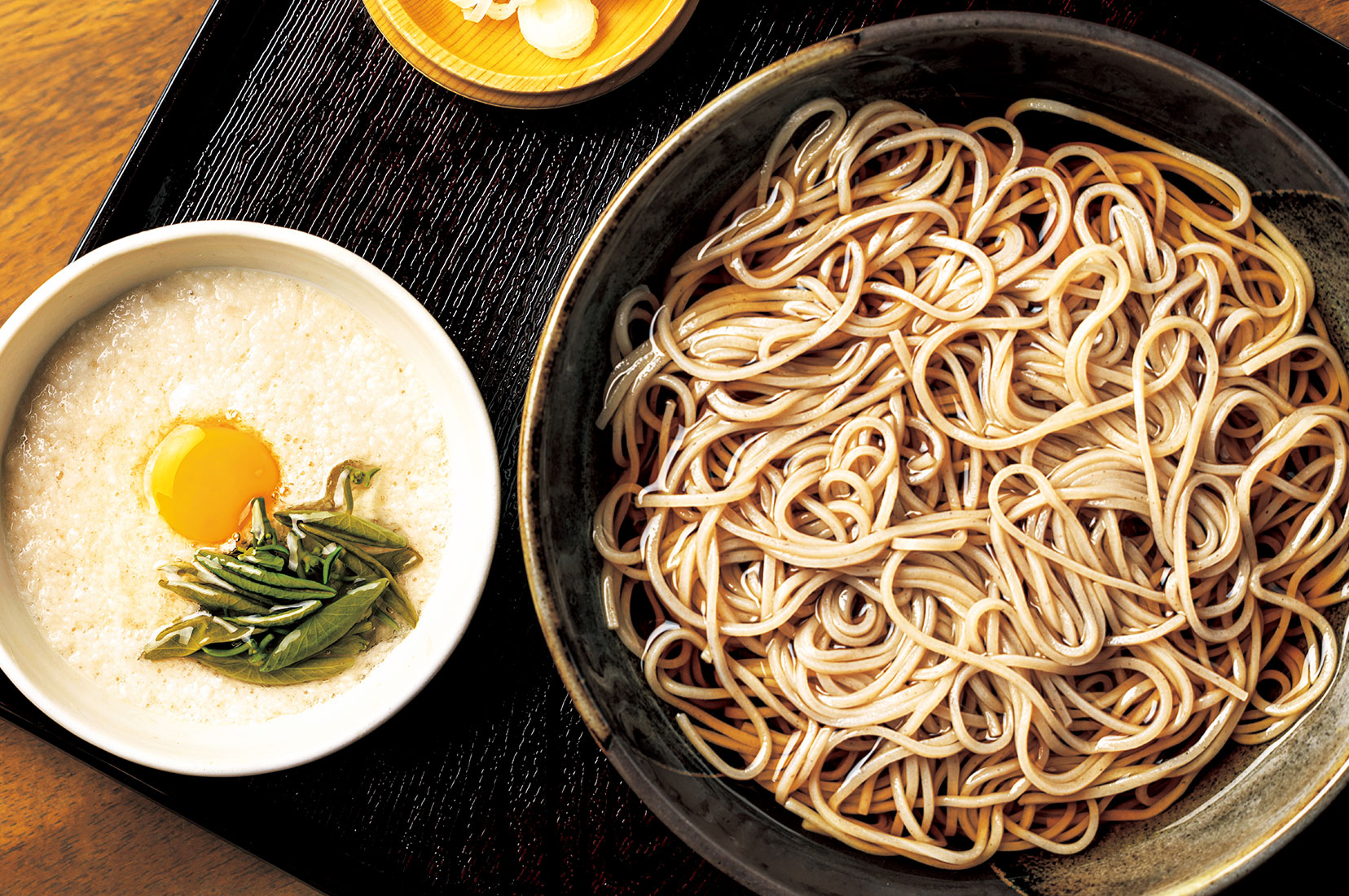
Takaosan Takahashiya
2209 Takaomachi, Hachioji-shi, Tokyo
Tel. 042-661-0010
The noodles are thin, made from 60% buckwheat flour kneaded with grated yam and top-grade flour. The accompanying tororo (grated yam) is an equal mix of viscous Japanese yam and creamier Chinese yam. There have been many tororo soba restaurants on Mt. Takao since olden times because they want to feed a nutritious meal to worshippers who climb the mountain. “Recently even customers from overseas are able to eat tororo soba skillfully with chopsticks,” said Takahashi. To add variation to the texture, hot tororo soba is served with a topping of tonburi seeds (also known as the “caviar of the field”) and cold tororo soba is served with watershield.
Mt. Takao, with its abundant natural environment, is a mere hour by train from central Tokyo. Here you can take a deep breath and forget all the hustle and bustle for a while.
Text: Hiroe Nakajima
Photos: Shinsuke Matsukawa
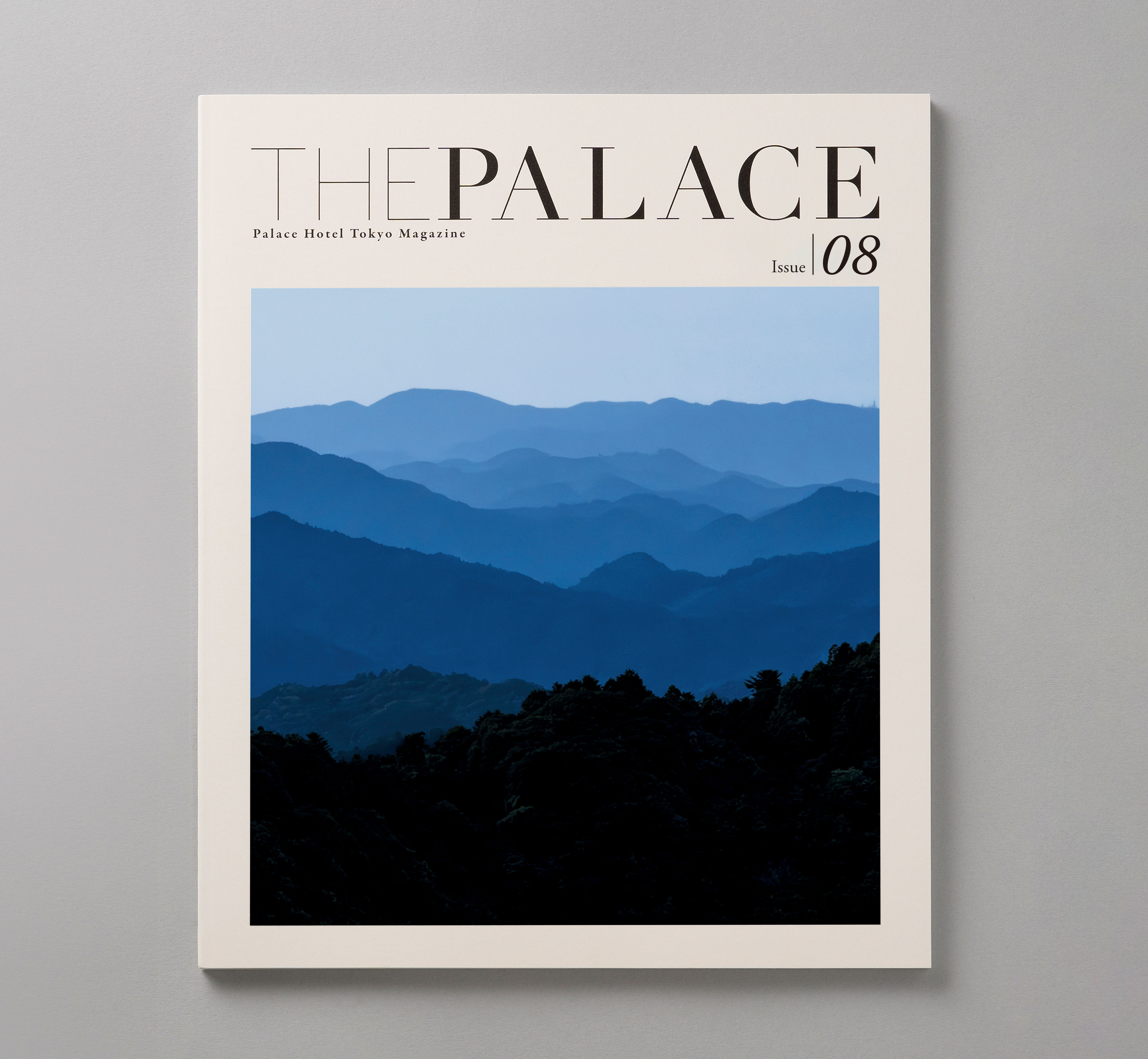
This article is based on an article that appeared in THE PALACE Issue 08 published in February 2025 and contains information current as of February 2026. Please note that the article uses text and photos from 2025, and there may be some information that is not up to date.
More